
Home EV Charger Installation in Buffalo, NY
Pull in. Plug in. Charge where you already park.
Bring Level 2 charging to your garage or driveway with an installation plan that fits your vehicle, electrical panel, and daily routine. Already bought a Tesla Wall Connector or another home charger? Still deciding between a hardwired charger and a 240V outlet? Start with the work your home actually needs.
This is a demand-test pilot. No Buffalo-area installer is confirmed; calls currently ring the website operator and may go unanswered.
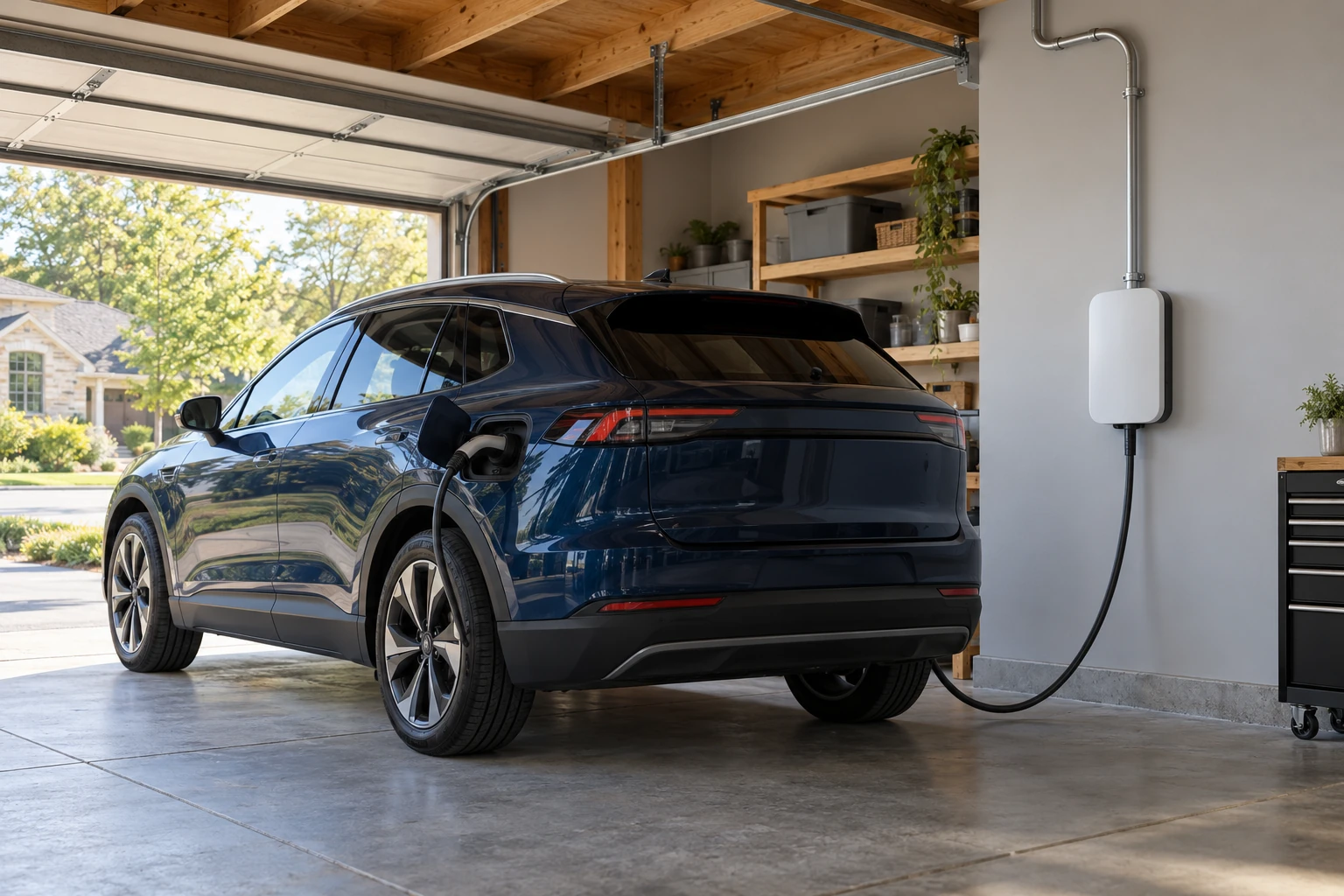
Start with your charging project
You do not need to know the right amperage or your panel's spare capacity before you call. A useful installation quote starts with your car and parking space.
| What you need | What to discuss |
|---|---|
| A home Level 2 charger | The charging equipment, electrical capacity, dedicated circuit, and cable reach to your usual parking position |
| Tesla home charging | Wall Connector or Universal Wall Connector installation, or the right outlet for a compatible Mobile Connector |
| A plug-in charger | A 240V EV charging outlet matched to the charger manufacturer's specified plug and circuit requirements |
| Help with an older or full panel | An electrical capacity assessment before committing to a panel or service upgrade |
| Advice before buying equipment | Your vehicle's connector and AC charging capability, parking location, and a suitable installation scope |
ChargePoint, Emporia, Rivian, Ford, Tesla, and other equipment models can require different arrangements. Give the exact model if you have it. Manufacturer names describe equipment; they do not mean this website is affiliated with or certified by those brands.
What does home EV charger installation cost in Buffalo?
For an uncomplicated project, set aside $2,000–$3,500 as a conservative planning allowance for installation, ordinary charger hardware, and a reserve. This is our suggested budget, not a Buffalo price survey, advertised package, or guaranteed quote. Some straightforward jobs cost less; additional electrical or site work can take a project beyond it.
For context, Qmerit's March 2026 national guide reports installation costs of $749–$2,500. That reference is not a local all-inclusive price. Our planning allowance leaves room for hardware and contingency rather than asking you to budget around the lowest advertised installation figure.
A provider needs to see how power will reach the parking space. A short, accessible route beside a suitable panel is a different job from wiring through finished rooms or reaching a detached garage.
Before accepting a quote, confirm whether it includes charger hardware, circuit work, mounting, permits and inspection, setup, and any surface repairs. Load management, panel or utility service work, trenching, and restoration should be identified separately when needed.
Level 2 charging that fits your daily driving
Home Level 2 charging uses 240V. Level 1 uses 120V and may be sufficient for modest driving needs and a long time parked. The Department of Energy's consumer guidance explains both portable and hardwired home charging options.
The useful question is how much energy you need to replace between trips. The vehicle, charger, configured current, and available charging time determine what your setup can deliver. Buying the most powerful charger does not guarantee the fastest charging your car can use.
If you drive a plug-in hybrid, mention that too. A smaller battery and a different daily routine can change the installation that makes sense.
Hardwired charger or plug-in outlet?
| Arrangement | When to discuss it | What the electrician needs to check |
|---|---|---|
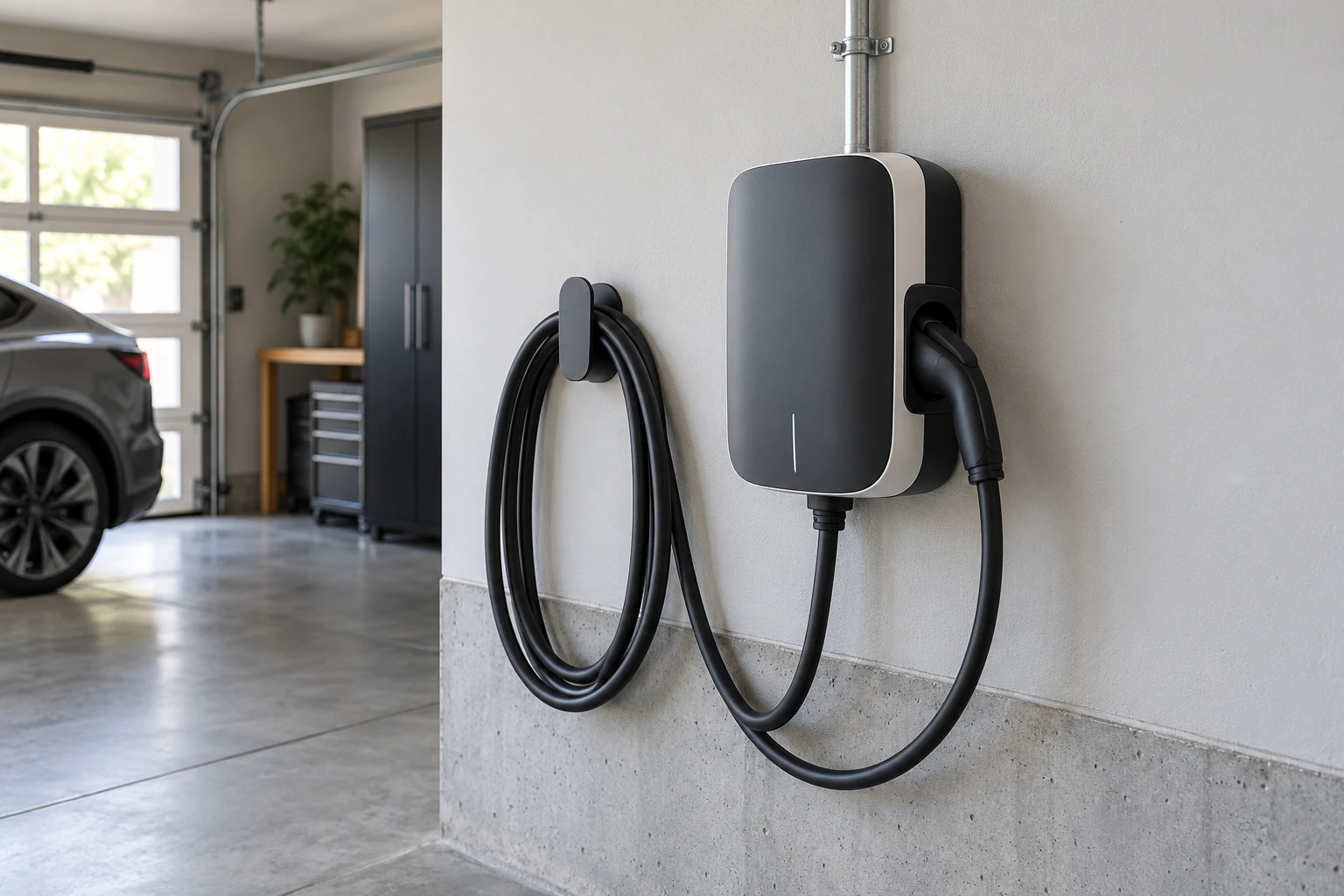
| Hardwired wall charger | You want a dedicated installed charger with its cable ready to use | The equipment instructions, mounting, circuit design, configured current, and electrical capacity |
| Plug-in Level 2 equipment | Your charging unit is designed to use a specified 240V receptacle | The correct receptacle, equipment rating, dedicated circuit, and required protection |
| An existing garage outlet | You already have a 240V connection near the car | The actual circuit and receptacle condition and suitability for sustained EV charging |
A nearby dryer-style outlet is not automatically a ready-to-use EV charging circuit. Have it assessed before making it part of your plan. Do not use an extension cord to make a poorly placed charger reach the car.
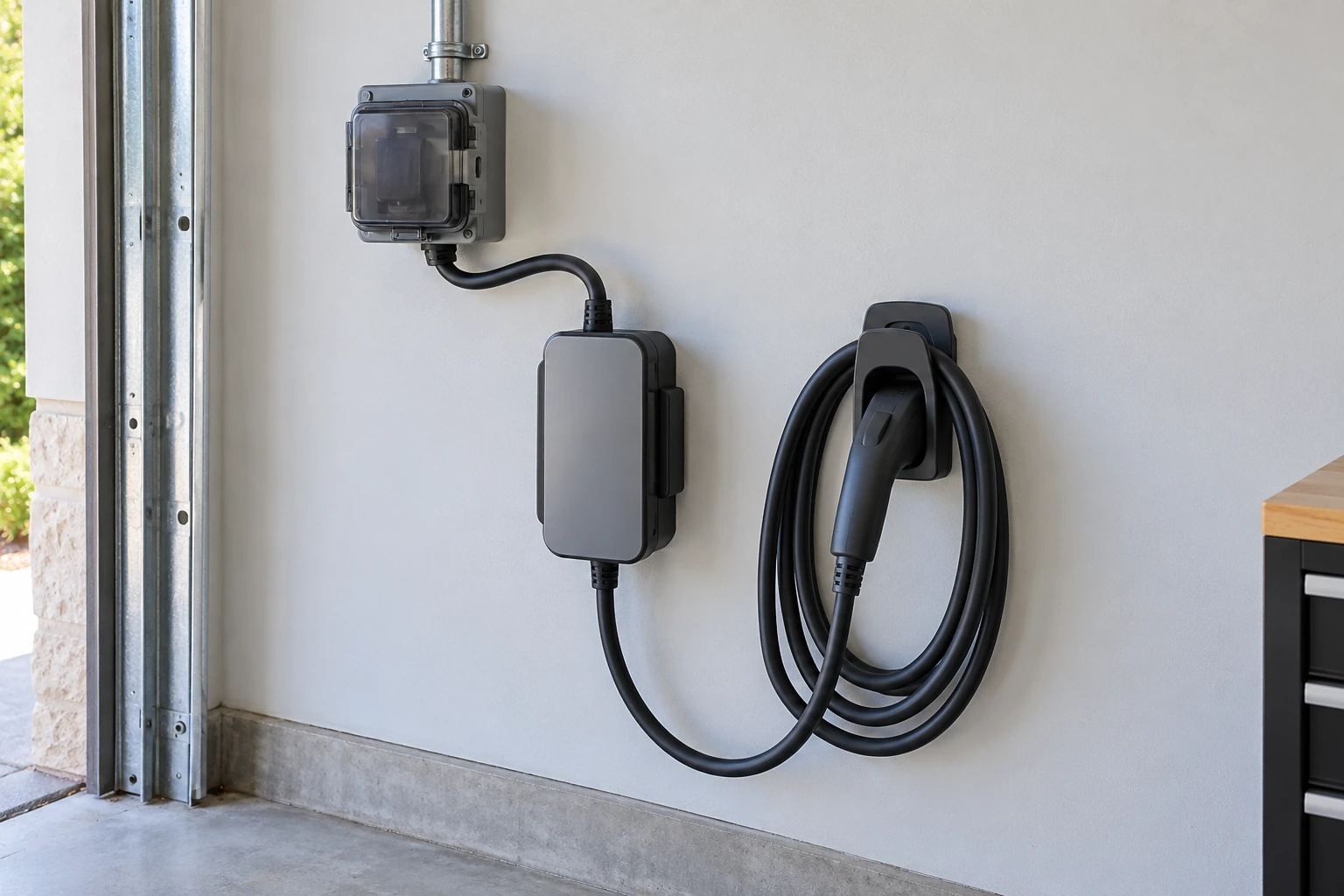
Your EV does not automatically need a new panel
Spare breaker spaces and spare electrical capacity are different things. An assessment should consider the home's load, service capacity, panel condition, compatible breaker positions, and intended charging current.
Possible solutions include a suitable lower charging current, supported load management, additional breaker space, or an electrical upgrade. Tesla documents power-management options; the electrician still needs to confirm suitability for your equipment and property.
If someone recommends an upgrade, ask what it solves. A subpanel, replacement panel, and utility service upgrade are different scopes. A subpanel does not by itself increase the home's utility service capacity.
Put the charger where you will actually use it
Attached garage
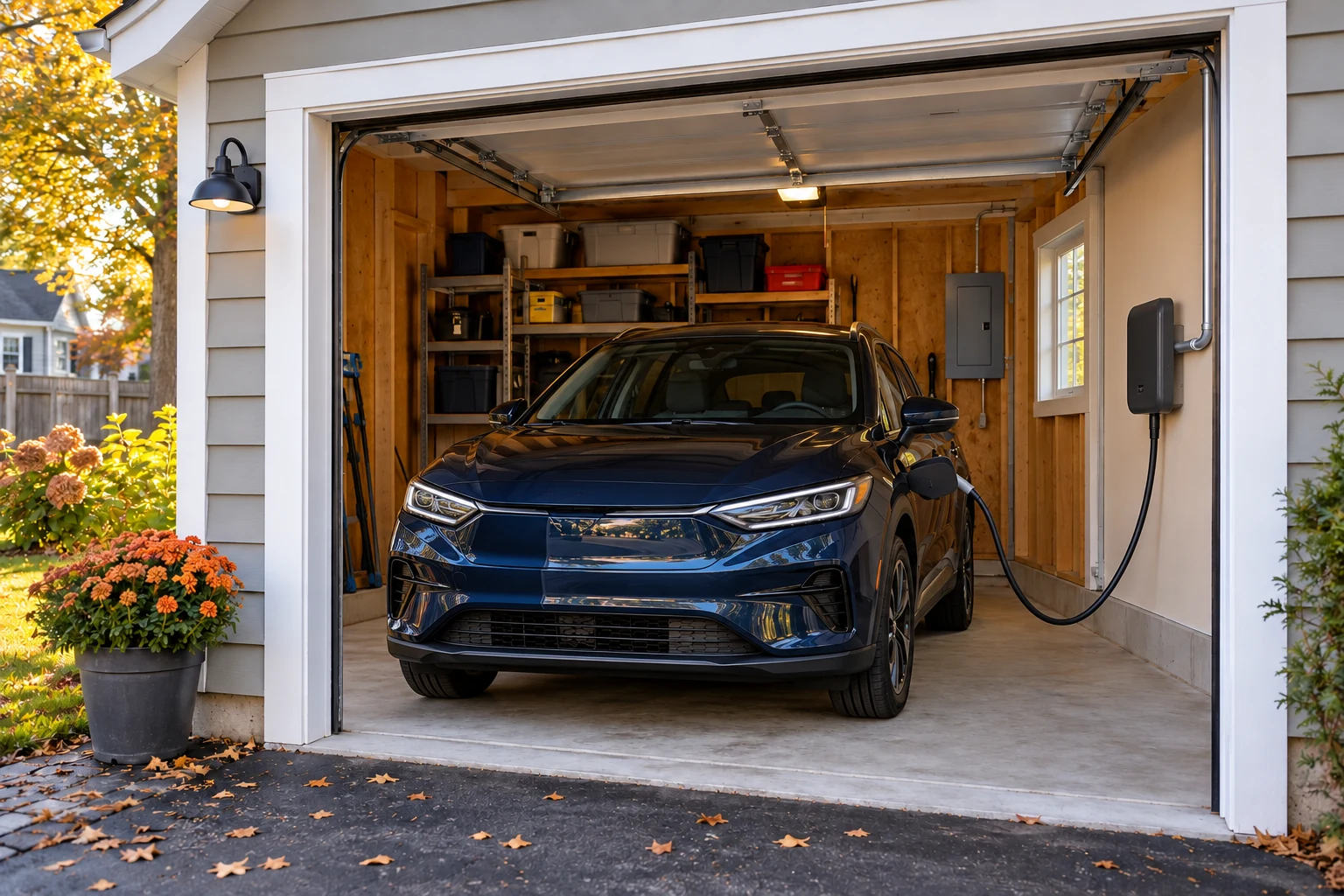
Choose the parking position before choosing a mounting spot. Check which side of the car has the charging port, whether you normally reverse in, and whether the cable will reach without crossing the main walking route. The closest wall to the panel is only useful if it also works with the car.
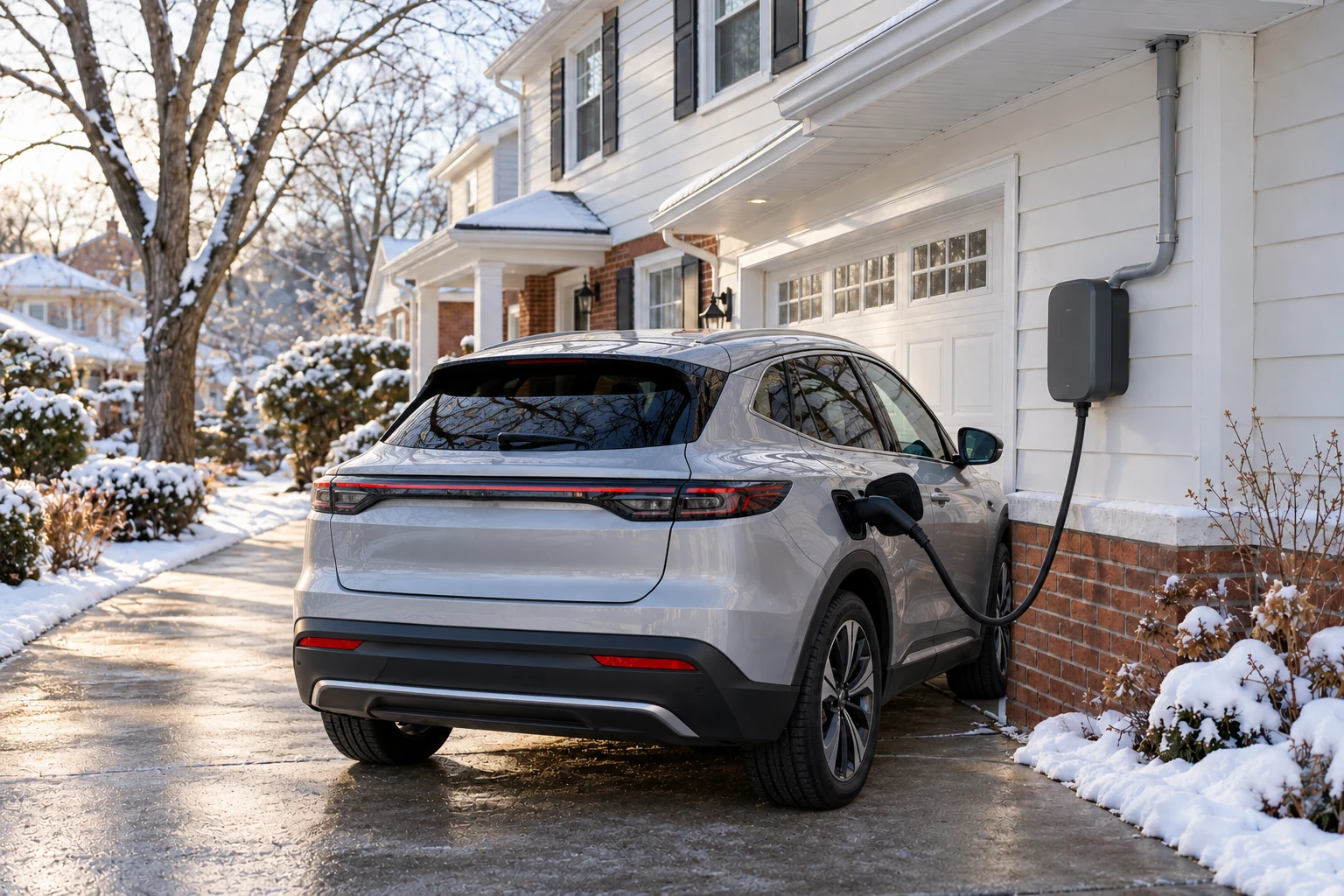
Driveway or outdoor parking
Discuss equipment suitable for outdoor use, mounting, exposure, and cable storage. In Buffalo, include your snow-clearing route in that conversation. The charger should remain usable when the driveway is cleared and the cable should stay out of vehicle and pedestrian paths. Outdoor rated does not mean suitable for submersion or every possible location.
Detached garage
An existing supply to the garage needs assessment before an EV charger is added. Ask whether the quote uses that supply or includes new wiring, excavation, and restoration. Establish who handles the electrical work and who handles concrete, paving, or landscaping repairs.
Two EVs now or later
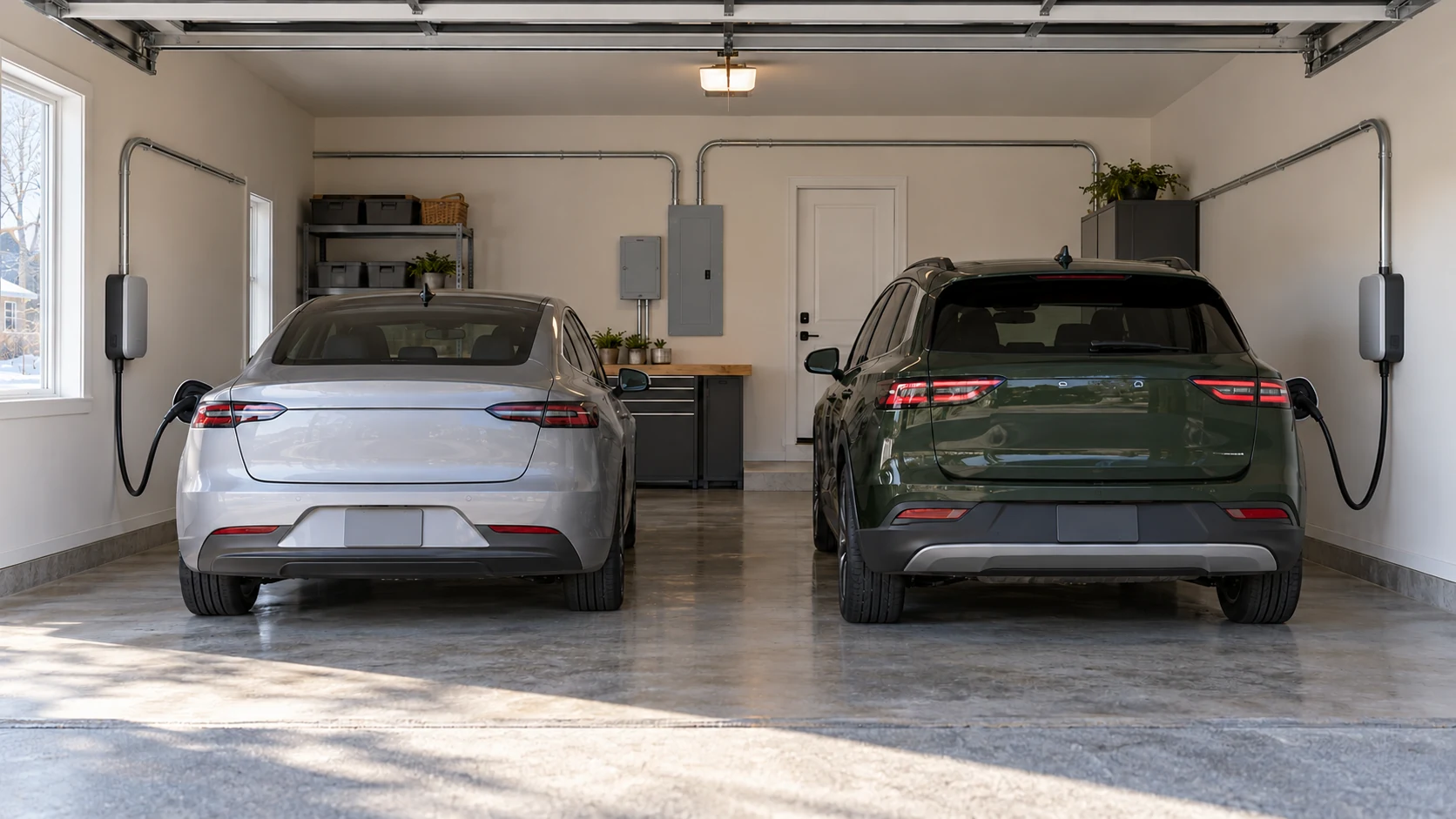
Tell the provider if a second vehicle is part of the plan. Cable reach, charging schedules, available capacity, and supported power sharing matter more than simply adding a second box to the wall.
Use the home charging planner to organize your daily energy and parking needs before the call.
Buffalo permits and the right local authority
For a property within the City of Buffalo, the official permit portal lists EV car charger work under Repair and Electrical permits.
Nearby municipalities have their own processes. A Buffalo mailing address does not establish that Buffalo city handles the property. Have the performing provider identify the correct authority, permits, inspection arrangements, and applicable charges before work begins.
Ask for the name of the company doing the installation and the credentials required in your municipality. Its insurance and workmanship terms should be confirmed directly with that company.
Plan for a future provider conversation
- Describe your location and project. A future provider will need your town or city, ZIP code, vehicle or charger model if known, and usual parking space.
- Confirm service fit. If a provider joins this referral network, confirm the address and job type it accepts, any assessment charge, and its service area.
- Review the scope and price. Before hiring any electrician, agree on the installation, exclusions, permits, and scheduling with the company performing the work.
This pilot does not currently arrange quotes, appointments, or installations.
Buffalo and nearby communities
The service-area directory provides local planning information for Buffalo, West Seneca, Amherst, Cheektowaga, Tonawanda, and surrounding communities. It does not confirm installer availability.
Town, city, village, and postal names can differ. Williamsville, Kenmore, Depew, and East Amherst need address-specific checks. A community listed in a guide is not a guarantee of provider availability at every address.
Questions before you call
Can I call before I buy a charger?
Yes. You can use the planning guides to list your vehicle, parking space, and charging needs. This pilot does not currently arrange an assessment.
Can I supply my own charger?
Tell the provider the exact model and whether you have already bought it. Confirm that it supports the installation and who is responsible for equipment warranty questions.
How long does installation take?
Ask about both the work appointment and the full project timeline. Permits, inspections, equipment, site access, excavation, and utility work can affect the schedule. A straightforward appointment does not mean the entire project can be promised for the same day.
Can the charger go outside?
It may, with suitable equipment and an installation designed for the location. Mounting, exposure, electrical route, and cable reach all need checking.
Do I need a 200-amp service?
There is no universal answer based on owning an EV. Ask for a load and equipment assessment, including suitable charging-current and load-management options.
Is this a public charging station?
This website helps you discuss installation at a property. It does not operate a public charging location or provide roadside charging.
Next step
Call about home EV charger installation
Use the guides to prepare questions for a qualified electrician. Calls currently ring the website operator; no local installer or installation quote is available yet.
No provider is currently confirmed. Do not call expecting a quote, booking, or callback.